




Meagan Burd and her high school teaching colleagues see a troubling trend: too many high school students aren’t reading or writing well enough to learn effectively across a range of subjects — from science to civics.
Nationwide, studies show that nearly two-thirds of high school seniors don’t read proficiently. In New Hampshire, SAT scores show nearly half of high school students fall into that category — seriously hampering their ability to learn.
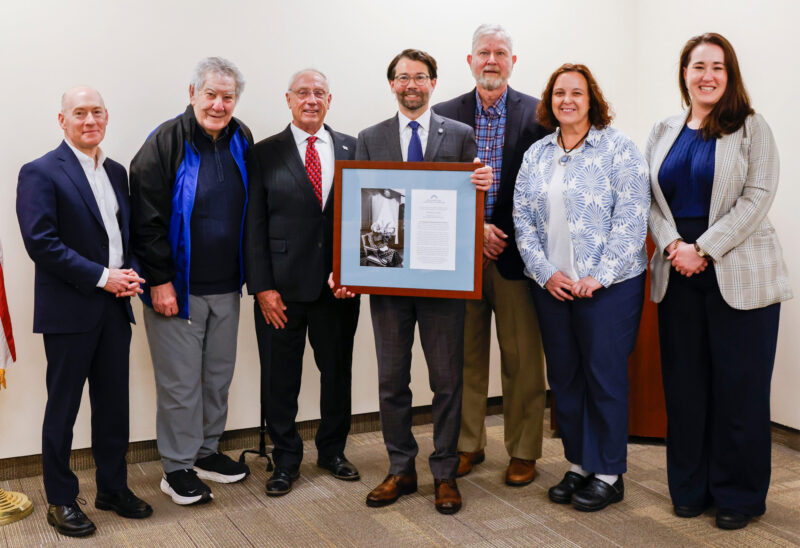
As the recipient of the 2026 Christa McAuliffe Sabbatical from the New Hampshire Charitable Foundation, Meagan hopes to help close the troubling reading and learning gap. She plans to produce teacher training (professional development) materials to help high school teachers incorporate reading and writing literacy in all classroom subjects.
The sabbatical, created in 1986 in honor of the Concord High School teacher and astronaut, gives an exemplary New Hampshire teacher a year off with pay and a materials budget to bring a great educational idea to fruition.
“Previously, it had been assumed that children would learn to read by the fourth grade and then shift to reading to acquire knowledge from texts,” Meagan wrote in her sabbatical application. “This ‘learn to read, then read to learn’ approach has contributed to growing disparities in students’ reading and writing abilities.”
For too many students, fourth grade comes and goes without that mastery being achieved — then they find themselves struggling.
Many factors have contributed to the literacy gap, Meagan said, including school disruption during the COVID-19 pandemic, shorter attention spans driven by social media and other factors, kids generally reading less and shifts in technology. While there has been some improvement since the pandemic, she said there still is much work to be done.
Research and classroom experience is showing that in high schools, learning reading and writing skills as part of math, science, social studies and other subjects is more effective than separate specialized reading classes because students spend so much more time in their other classes, Meagan said.
“The more kids are practicing those skills in each of their classes, it will transfer,” she said. “They’ll be able to apply those skills elsewhere and carry it with them to know how to become stronger learners and apply the skills themselves.”
The challenge is that professional development for high school teachers consistently focuses on higher level topics, not on the building blocks of literacy.
“So that’s my main goal: to support teachers with integrating literacy skills” into all subjects taught in high school, said Meagan, who has taught English for seven years in Bow, and previously in Belmont and Concord.
Meagan’s project is to produce training materials and short videos, to be available online, with personal coaching if requested, to help teachers confidently make reading and writing literacy part of their classes. She envisions “setting teachers up for success for implementing that in the classroom.”
Mindful that time is precious for busy teachers who are focused on their own subject areas, Meagan said long training webinars would not be popular, or useful. “So, my goal is to make this a nice, bite-size strategy you could use in your classroom.”
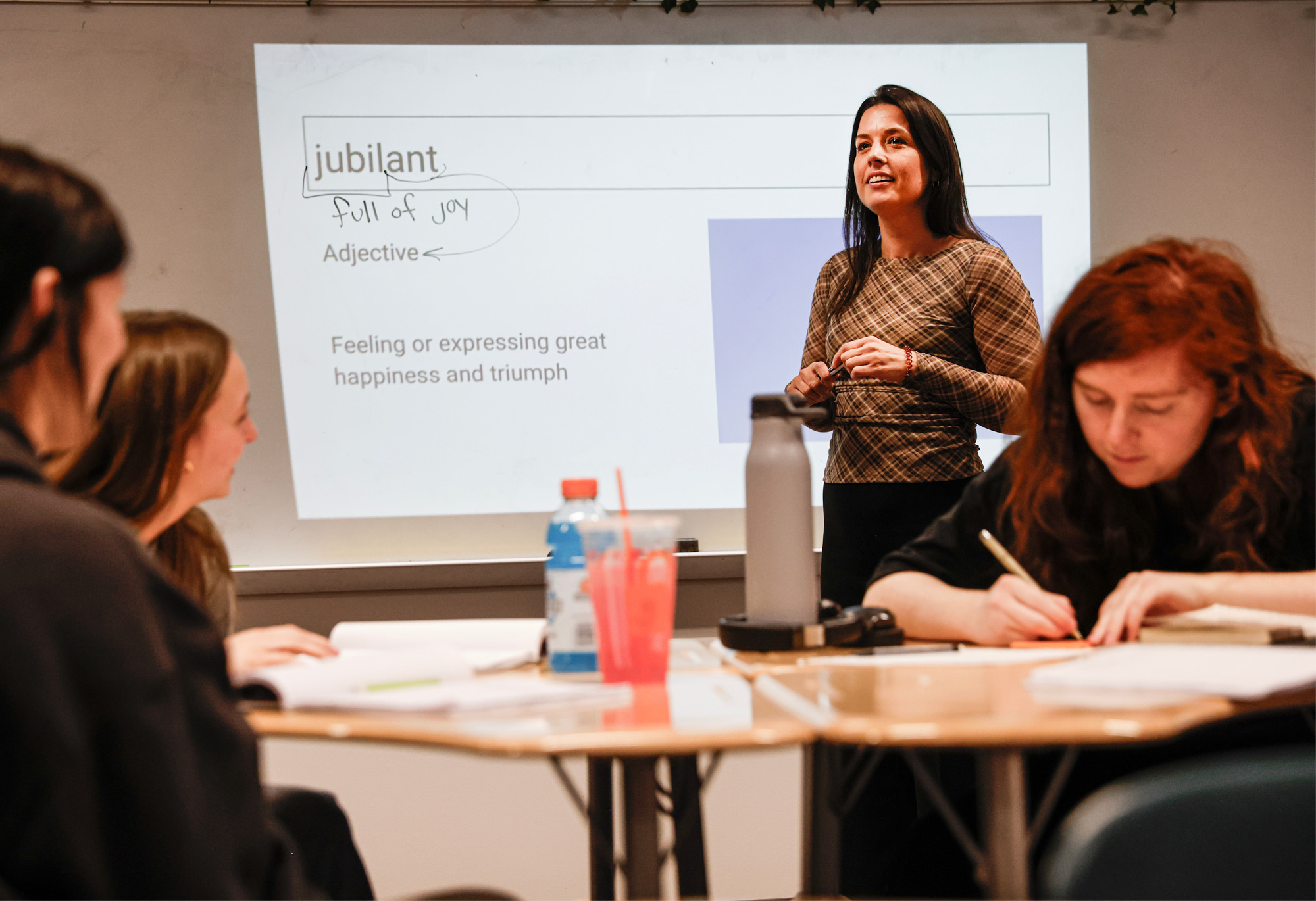
Vocabulary is a primary concern as students confront new terms. The traditional method was to assign students vocabulary terms to memorize for a quiz. New research shows that students need to be taught explicitly how to decode a word — breaking it into parts to learn the definition in the context of what they are reading – so they can recognize those word parts and their meanings when they appear in new words.
Meagan and her Bow High School colleagues already are integrating literacy in other classes. She has developed a literacy team and led professional development sessions for teachers. The experience led her to propose the sabbatical project — “to show that we’re all a team in confronting the literacy concerns that we have for students, and we can all work together to build them up in that area.”
Before starting the team, Meagan worried some teachers might object to adding literacy to their lessons because most professional development training in literacy is designed for elementary teachers and reading specialists.
“I did think I would come up against a wall of ‘It’s not our job to teach reading,’ but I really haven’t,” she said. “Our teachers really want to help students, and they care about that, and we just need to know the strategies to be able to do that.”
Related Stories

Onward in partnership
Supporting students from enrollment through graduation.

Onward with determination
Helping farms adapt to the climate crisis.

Onward with hope
Big Brothers Big Sisters gives young people a key to independence.