





By her mid-20s, Lindsay Rinaldi had everything an aspiring soprano opera singer could hope for: a master’s degree in opera performance, a year’s study at the prestigious Accademia Internazionale della Musica in Milan, appearances in Italy and across the U.S., and voice instructor positions at three colleges.
But as her opera prospects flourished, Lindsay found herself growing weary of the constant travel and a career where success demands a self-centered focus, 24/7. She also missed Nashua, and yearned to do something to give kids access to music that could enrich their lives.
So, in 2011 Lindsay returned to New Hampshire and joined the Nashua Community Music School as a voice instructor and then, in 2014, as its executive director. Today, she finds her greatest satisfaction in making music education, performance and therapy accessible to anyone, regardless of their ability to pay or other limitations. She has made music therapy a centerpiece of the school’s offerings to the community.
“I wanted to do something to give back to my hometown,” Lindsay says. “So, it’s really amazing to be here now and to see how far the school has come, to think about the amazing staff and instructors we’ve brought together, and to realize how many people we’re reaching who wouldn’t have these opportunities otherwise.”
Each week, more than 600 people take part in one of the school’s programs — from individual music lessons to group ensembles — nearly half of them tuition-free.
Just over half of the school’s students come for music therapy — which has become one of its cornerstone programs.
Unlike traditional music education, which focuses on teaching students to play music, music therapists use music to help people cope with some of life’s greatest challenges. The school’s three board-certified music therapists are trained in evidence-based treatment that helps people reach goals in areas such as social and emotional skills, physical and academic skills, and cognition. They have created programming that takes into account the nature of trauma and supports healing and healthy social relationships. Their programs for young people are designed to help children process experiences, regulate emotions, build self-confidence, develop positive body awareness and create social connections through music, dance
and play.
Music therapists from the school bring programs to area organizations that serve children, young adults, older adults with dementia, people with disabilities and veterans.
On a winter day, a half-dozen children from ages 3 to 5 gathered in a circle in the preschool room of Marguerite’s Place for music therapy. The nonprofit provides transitional housing and support to mothers and children who have experienced homelessness. At first glance, the session looks like any other preschool class, with kids dancing, singing and playing simple musical instruments, as music therapist Sara Mendes strums a guitar and sings.
But for the children at Marguerite’s Place, who may come from homes where substance use, domestic violence and food insecurity were issues, the music therapy program offers a safe, inviting space — and a playful path to self-expression and healing, says Krystal Bloom, the music school’s director of music therapy.
“Right here, you’re seeing kids who don’t normally get super involved with class or with other kids or adults, and now they’re up dancing and singing and interacting with one another and building connections. It’s amazing to see what music does for them,” says Krystal.
Candace Gordon, Marguerite’s Place director of programs, invited the music school to run two therapy programs, for which a Charitable Foundation grant provides funding.
“When you see these groups in person, you realize what a gift this is to everyone, not only to the kids, but to their parents, too,” Candace says. “You can really see the difference it makes for them.”
The school’s therapists perform intake assessments for each client, create individual treatment plans, conduct group and/or individual therapy sessions, and assess and report on progress for each client.
A few hours after visiting Marguerite’s Place, the music school hosted an adaptive rock band from the Nashua Center, which serves people with disabilities or acquired brain disorders. The band’s members, some of whom are nonverbal, joined in performing with drums, tambourines, rhythm sticks and guitar.
Katelyn, a band member, explained how she feels visiting the school each week. “Great! Happy!” she beamed. “I love singing so many songs!” And in a flash, she was back with the band, singing “Feliz Navidad.”
The music school also provides extended music therapy programming for military veterans. One veteran began meeting with Krystal a year ago, and was intimidated by the idea of learning an instrument, let alone talking about his challenges and feelings.
Now he plays piano smoothly — and recently played the opening piece at one of the school’s public recitals.
When Lindsay sees how the school’s music therapy programs help people to overcome obstacles, she’s grateful she returned to New Hampshire and the music school — even if it meant pursing a different dream than being a professional opera singer.
“Singing in front of a 60-piece orchestra? Nothing beats that feeling,” she says. “But I wanted to think about others, too. And here, I get to see the impact of our work on our students every day — and we still make amazing music together.”
Learn more at nashuacms.org.
Related Stories

Onward in partnership
Supporting students from enrollment through graduation.

Onward with determination
Helping farms adapt to the climate crisis.
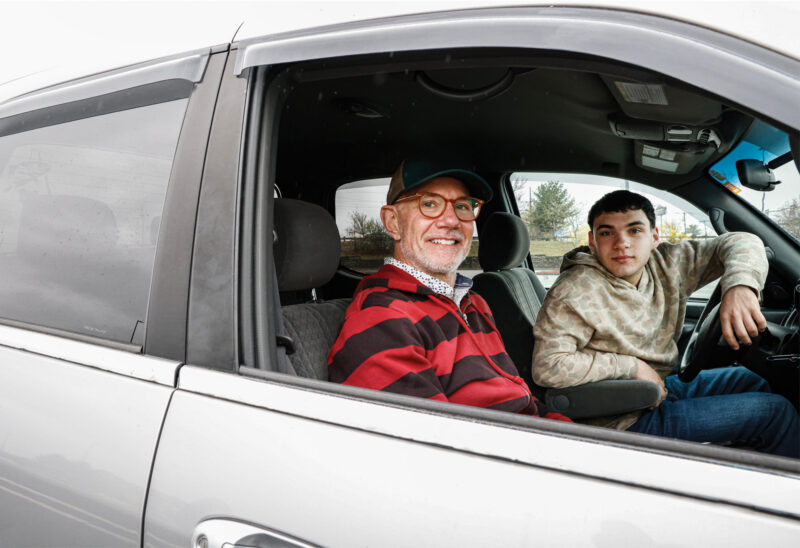
Onward with hope
Big Brothers Big Sisters gives young people a key to independence.